


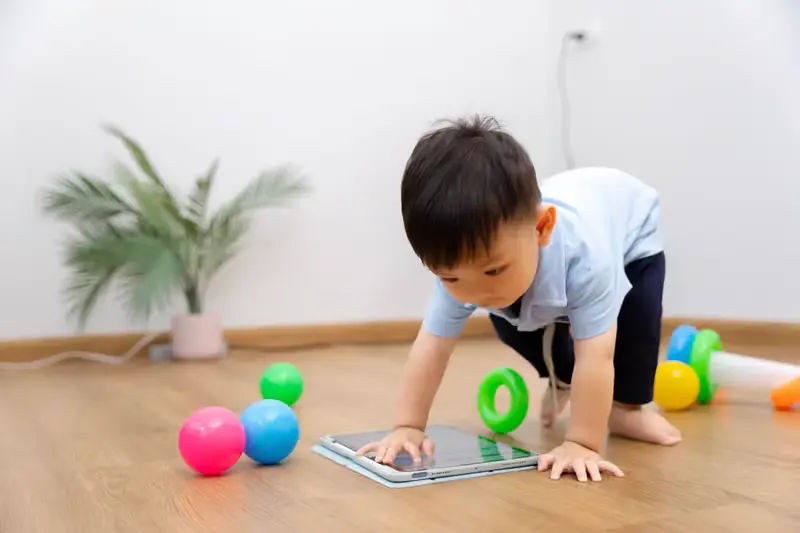
There is a moment every parent remembers. It might be the first real smile that melts a tired midnight. It might be the wobbly first step across the living room, or the day your child pointed at a dog and said a word that sounded just like hello. These moments feel like magic, and they are also something more. They are developmental milestones, the skills and behaviors most children show within a certain age range as their bodies and brains grow. Understanding what they are, and paying gentle attention to them, is one of the kindest things a parent can do.
A developmental milestone is not a test your child must pass. It is a signpost along a very long road. Doctors and child development researchers have studied thousands of children over many decades to learn when most children begin to roll, crawl, talk, share, and solve small problems. From this research, they created general age ranges that describe what many children can do at a given stage. The key word is range. One child may walk at ten months and another at fifteen, and both can be perfectly healthy. The milestone tells you where to look, not where your child must be standing on a specific day.
Think of it like a map drawn for a journey that every traveler takes in a slightly different way. The route is similar, the landmarks are shared, and the order often follows a pattern. A child usually learns to sit before crawling, and crawling before walking. A child usually babbles before saying words, and words before sentences. Skills build on one another like blocks in a tower. When you understand this pattern, you can see your child progress more clearly, and you can notice when one block seems to be missing long after it should have been placed.
The Main Areas of Growth Every Parent Should Know
Child development is not one single thread. It is a rich weave of several areas that grow together and constantly influence each other. Experts usually group them into physical, cognitive, language, and social and emotional development. A strong child is not simply one who is ahead in one area, but one who is growing steadily across all of them. Looking at each area separately gives you a fuller and fairer picture.
Physical Growth and Movement
Physical development covers two kinds of movement. Gross motor skills use the large muscles of the body, such as those needed for holding up the head, rolling over, sitting, crawling, walking, running, jumping, and climbing. Fine motor skills use the small muscles of the hands and fingers, such as those needed for grasping a toy, picking up a crumb, stacking blocks, holding a crayon, and later fastening buttons or writing letters. Both types of skill grow from the center of the body outward and from the head downward. That is why babies control their neck before their legs, and their arms before their fingers.
Physical progress is also about growth itself, including height, weight, and head size, which pediatricians track on growth charts at regular visits. These numbers matter less as single points and more as a curve over time. A child who follows a steady line, even a low one, is usually growing well. A child whose curve suddenly drops or climbs sharply deserves a closer look. Vision and hearing belong in this area too, because a child who cannot see or hear clearly may appear delayed in other ways when the real cause is a sensory issue that can be treated.
Movement is how young children explore the world, so physical milestones quietly feed every other kind of learning. A baby who can reach for a toy is also learning about cause and effect. A toddler who can walk to a friend is also practicing social connection. This is why supporting movement through tummy time, safe floor play, outdoor adventures, and simple games is never just about exercise. It is about giving the whole child room to grow.
Thinking, Learning, and Language
Cognitive development describes how children think, explore, remember, and solve problems. In the first months, it looks like a baby following a face with the eyes or turning toward a familiar voice. Later, it looks like a toddler searching for a toy hidden under a blanket, which shows that the child understands that things still exist when they are out of sight. By the preschool years, it looks like pretend play, counting, sorting by color, asking endless questions, and beginning to understand time and routine.
Language is closely tied to thinking, and many experts treat it as its own area because of how important it is. Language growth begins long before the first word. Cooing, babbling, laughing, and responding to a name are all early steps. Toddlers begin to use single words, then two word phrases, then short sentences. Understanding words, called receptive language, usually runs ahead of speaking, called expressive language. A child may understand far more than they can say, which is why talking, singing, and reading to your child from the earliest days is so valuable, even when they cannot yet answer.
What makes cognitive growth so exciting is that it responds so strongly to experience. Curiosity is not something we place inside a child. It is already there, waiting for safe spaces, interesting objects, patient adults, and plenty of conversation. When we follow the lead of the child, name what they see, and give them time to try, thinking skills often bloom in beautiful ways.
Feelings and Friendships
Social and emotional development is how children learn to understand feelings, connect with others, and manage themselves. It begins with the earliest bond between a baby and a caregiver. A baby who is comforted when upset learns that the world is safe and that people can be trusted. This foundation shapes how the child later forms friendships, handles frustration, and faces new challenges with courage.
Over the years, the signs change. A baby smiles back at you and shows joy with the whole body. A toddler plays beside other children, shows stubborn independence, and begins to say no with great enthusiasm. A preschooler starts to take turns, share, follow simple rules, and show care for a hurt friend. A school age child begins to understand fairness, build lasting friendships, and cope with disappointment. Big feelings do not disappear along the way. They simply become easier to name and manage, with help from loving adults who model calm and offer words for emotions.
Many parents focus heavily on physical and learning skills because they are easy to see and measure. Yet social and emotional skills are often the strongest predictors of how well a child will do in school and life. A child who can ask for help, calm down after upset, and cooperate with others carries tools that last a lifetime. These skills deserve just as much attention and celebration as a first step or a first word.
Why Tracking Matters More Than Most Parents Realize
Some parents wonder whether tracking milestones is really necessary. After all, children grow whether or not we write anything down. The answer is that watching progress closely is one of the most powerful ways to protect a child future. The reason is simple. The earlier a concern is noticed, the more options there are to help, and early help usually works better than late help.
The brain grows faster in the first few years of life than at any other time. During this period, connections between brain cells form at an astonishing speed, and they are shaped by everything the child sees, hears, touches, and feels. This is a window of great opportunity. If a child needs extra support with speech, movement, hearing, or social connection, therapy and guidance during this window can make a real difference. Waiting and hoping the issue will fix itself can mean losing precious time, especially when the child could have benefited from support much sooner.
Tracking also builds confidence. When you know what to expect, you worry less about normal variation and recognize genuine progress. Many parents carry a quiet fear that they are missing something or doing something wrong. Having a gentle framework replaces vague anxiety with calm awareness. You begin to notice the small wins that might otherwise slip by, such as a new sound, a new gesture, or a new way of solving a problem. These small wins are the heartbeat of childhood, and noticing them deepens your bond with your child.
Finally, tracking improves conversations with doctors, teachers, and caregivers. A parent who can say that their child stopped using a word they once said, or that they have not started pointing by fifteen months, gives the professional clear and useful information. Specific observations lead to better guidance than a general feeling that something is off. Your daily view of your child is irreplaceable, and when it is paired with professional knowledge, it becomes a strong safety net.
A Look at Milestones From Infancy to the School Years
Every child is different, but general patterns help parents know what to watch for. In the first few months, most babies begin to lift their heads during tummy time, follow moving objects with their eyes, smile in response to a face, and make cooing sounds. By around six months, many babies roll over, reach for toys, laugh out loud, recognize familiar faces, and begin to babble with sounds like ba and ma. They may also start to show stranger awareness, which is a sign of healthy attachment rather than a problem.
Between nine and twelve months, many babies sit without help, crawl or scoot, pull up to stand, and use a pincer grasp to pick up small bits of food. They wave goodbye, respond to their name, point at things they want, and may say a first simple word. Around this time, they also begin to understand simple words like no and may play games such as peekaboo. These shared back and forth moments are rich learning experiences and also deep emotional connections.
During the toddler years, from one to three, growth is dramatic. Most children begin walking, then running, climbing, and kicking a ball. They learn to feed themselves, scribble with crayons, and stack blocks. Language grows from a handful of words to short sentences, and many two year olds can follow simple directions and name familiar objects. Emotionally, this stage is full of big feelings, since a toddler wants independence but still needs comfort. Tantrums are common and are a normal part of learning to manage strong emotions.
In the preschool years, from three to five, children usually hop, pedal a tricycle, draw simple shapes, and begin to dress themselves with some help. Speech becomes clearer, and most children can tell short stories, ask many questions, and understand the idea of taking turns. Pretend play grows more creative, and friendships begin to matter. By the early school years, children refine their skills. They learn to read, write, follow multiple step instructions, work in groups, and understand rules and fairness. Remember that these are broad guides. A child may excel in one area while taking more time in another, and that is often completely normal.
Easy Ways to Follow Your Child Progress at Home
You do not need fancy tools or special training to track milestones well. What you need is attention, a little consistency, and a willingness to write things down. Many parents keep a simple journal or a notes app on their phone where they record new skills with the date. A single sentence such as today she stacked four blocks or he said the word more at dinner is enough. Over time, these notes become a precious record that you will treasure, and a helpful reference during doctor visits.
Photos and short videos are also powerful tools. A video of how your child walks, plays, or speaks can show a doctor things that are hard to describe in words. It can also show you how far your child has come, since progress is easy to forget in the rush of daily life. Reviewing old videos every few months often brings tears of joy, and a clear sense of just how much has changed.
Official checklists can guide your observations. Organizations such as the Centers for Disease Control and Prevention offer free milestone checklists and a milestone tracker app, organized by age from two months through five years. These resources use simple language and give clear examples of what to look for. Pediatricians also use structured screening tools during well child visits at set ages, so keep these appointments even when your child seems to be doing well. Screening is not a sign that something is wrong. It is routine care, just like checking weight and height.
Finally, observe your child in different settings. A child may behave one way at home and another way at daycare or with grandparents. Teachers and caregivers see skills and challenges you may not notice, especially in social settings with other children. Ask them how your child plays, listens, and interacts. Combining their view with yours creates a fuller picture, and it makes your child feel supported by a team of caring adults.
When Growth Takes a Different Path
Every parent hopes that the road of development will be smooth. For many families, it is. For others, there are bumps, detours, and moments of deep worry. Knowing how to tell what is normal from what needs attention can ease fear and guide action.
Normal Differences Versus Real Warning Signs
Many children reach milestones a little earlier or later than the average, and this variation is expected. Premature babies, for example, often reach milestones later when measured from their birth date, so doctors usually use an adjusted age based on the due date. Temperament, family patterns, and opportunities for practice all shape timing. A child who is cautious may walk later but with great steadiness. A child who watches quietly may speak later but in full sentences. These differences do not always signal a problem.
Still, some signs deserve prompt attention. Losing skills the child once had, such as stopping speech or social interaction, is always worth discussing with a doctor. Other signals include not responding to sounds or voices, not making eye contact, no babbling by about twelve months, no pointing or waving by about fifteen months, no words by sixteen months, no two word phrases by about two years, or a marked lack of interest in other people. Unusual stiffness or floppiness, or a strong preference for one side of the body, may also need evaluation. These signs do not always mean a serious issue, but they are good reasons to ask questions.
The Power of Acting Early
If you feel worried, trust your instincts. Parents know their children better than anyone, and research shows that parental concerns are often accurate. Do not let well meaning friends or relatives talk you out of seeking advice by saying that he will catch up or every child is different. While that may be true, it is better to check and be reassured than to wait and wish you had acted sooner. A pediatrician can examine your child, run developmental screenings, and refer you to specialists such as speech therapists, occupational therapists, physical therapists, or developmental pediatricians.
In many places, early intervention programs offer free or low cost evaluations and services for young children, often from birth to age three. You may not even need a doctor referral to start. These programs provide therapy, coaching, and support in the child natural environment, such as at home or daycare. Children who receive early help often make remarkable gains, and families feel less alone. Early action is not about labeling a child. It is about giving that child every possible chance to thrive in their own unique way.
Expert Advice for Parents and Caregivers
Child development specialists often share a few guiding ideas that bring both peace and purpose. The first is to focus on the whole child. Do not measure your child against a neighbor or a cousin, and avoid the trap of social media posts that show only highlights. Every child has a personal rhythm, and that rhythm deserves respect. Use milestones as a loving guide, not as a scoreboard that creates guilt or competition.
The second idea is that interaction is the best teacher. Experts stress what is often called serve and return, the back and forth exchange between a child and an adult. When a baby coos and you coo back, or when a toddler points and you name the object, you are building brain connections. These simple moments do more for growth than expensive toys or apps. Talk, sing, read, play on the floor, and put your phone away during these special times. Presence is the greatest gift.
The third idea is to create a safe and stimulating home. Offer a variety of materials such as blocks, books, balls, crayons, and safe household objects, and allow time for free play without constant direction. Play is the work of childhood, and it supports every area of development. Balance this with steady routines for sleep, meals, and rest, because a well rested and well fed child learns far better. Limit screen time, particularly for babies and toddlers, since real life interaction cannot be replaced by a screen.
The final piece of expert advice is to care for yourself. Parents who are exhausted, anxious, or isolated find it harder to notice and enjoy their child growth. Ask for support, share the load, and speak to a professional if you feel overwhelmed. A supported parent is better able to support a child, and your own wellbeing is part of your child development story.
Mistakes That Can Cloud the Picture
One of the most common mistakes is comparing children too closely. Comparison steals joy and breeds worry that may not be justified. Another is relying on the phrase wait and see for too long. A short period of observation can be reasonable, but when concerns persist, a professional opinion is the next wise step. A third mistake is treating milestones as strict deadlines. They are ranges, and a few weeks of difference rarely matters, though a long and growing gap in one area does.
Some parents also focus only on skills they can easily see, such as walking or reading, and overlook emotional growth, play, and social ability. Others push their child to meet a milestone early, using flashcards or drills, when the child simply needs play and time. Pressure can turn learning into stress. Finally, many parents forget to adjust for prematurity or to consider cultural and language differences. A child growing up with two languages, for example, may start speaking a little later in each language but usually has a rich total vocabulary. Keeping a wide and kind view helps you avoid unnecessary fear and unnecessary delay.
Final Thoughts
Tracking developmental milestones is not about pressure, perfection, or racing against other families. It is about paying loving attention to a small person who is changing every single day. When you watch closely, you catch the early smiles, the new words, and the brave first steps, and you also notice the moments when your child may need a little extra help. Both are acts of love. Keep your notes, trust your instincts, and ask questions whenever your heart feels unsure. Remember that you are the most important expert in your child life. Celebrate the small victories, forgive the slow days, and enjoy the journey, because these years pass quickly and every step is worth noticing.